Tuesday, 2 October 2018

Playing Viking Chess with Whale Bones

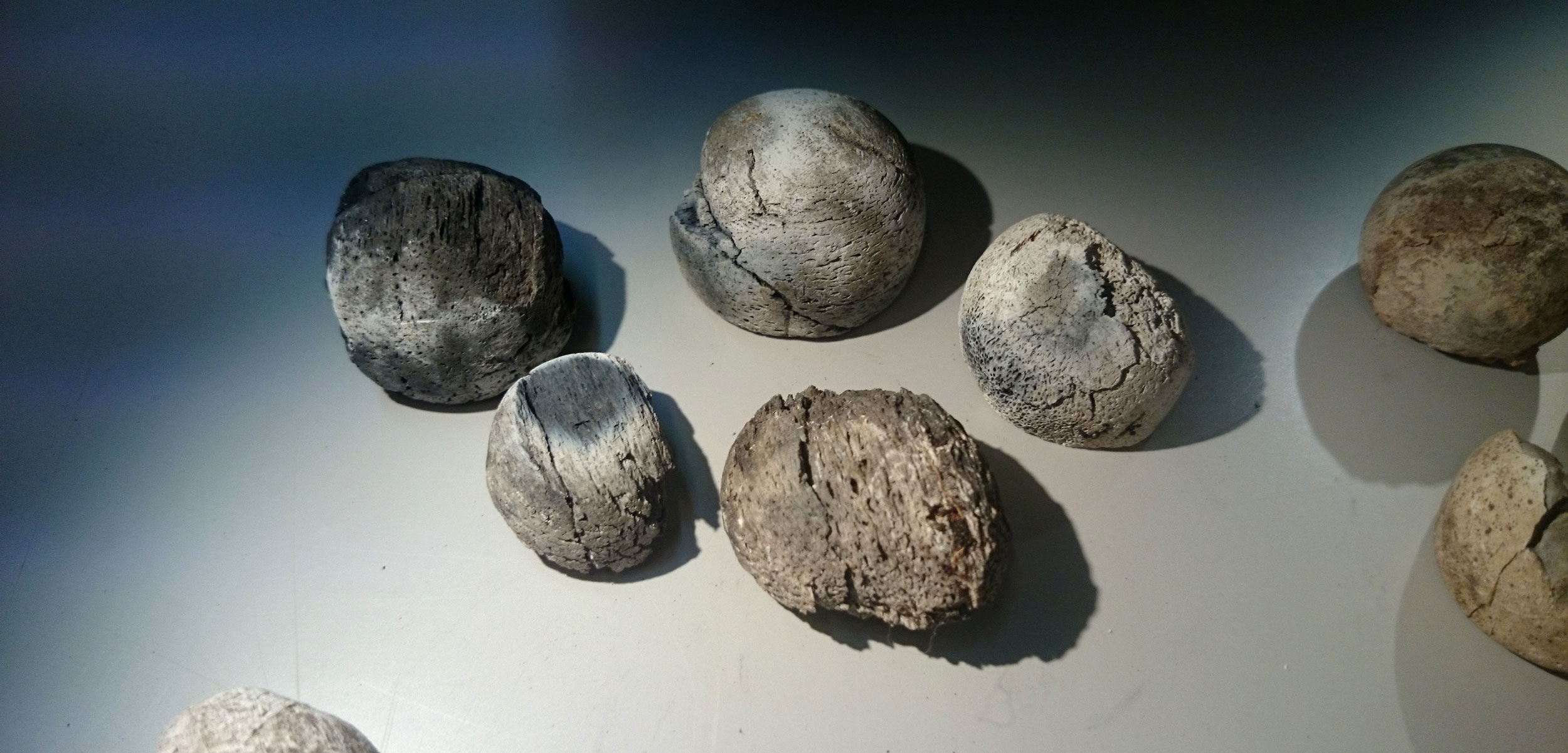
Researchers discovered hnefatafl game pieces made of whale bone in upper- and middle-class Vendel graves. Photo by Rudolf Gustavsson

Game pieces made of whale bone may be evidence of the emergence of industrial whaling in ancient Scandinavia.

In central and eastern Sweden from 550 to 793 CE, just before the Viking Age, members of the Vendel culture were known for their fondness for boat burials, their wars, and their deep abiding love of hnefatafl.

Also known as Viking chess, hnefatafl is a board game in which a centrally located king is attacked from all sides. The game wasn’t exclusive to the Vendels—people across northern Europe faced off over the gridded board from at least 400 BCE until the 18th century. But during the Vendel period, love for the game was so great that some people literally took it to their graves. Now, a new analysis of some hnefatafl game pieces unearthed in Vendel burial sites offers unexpected insight into the possible emergence of industrial whaling in northern Europe.

Read the rest of this article...

Ancient cemetery unearthed in Albania


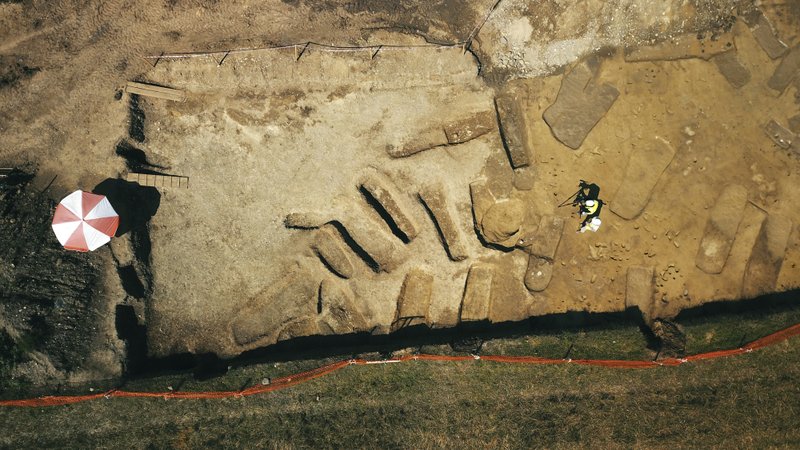
URAN, Albania (AP) — In a rich agricultural basin near the town of Korca in southeastern Albania, gas pipeline construction work is offering archaeologists a unique insight into 5,000 years of history in a country that was off most experts’ radar during decades of isolationist Communist rule.

The excavations near the village of Turan, which ended Friday after 18 months, have unearthed one of the biggest ancient cemeteries in Albania, with about 1,000 layered burials, several of them richly furnished.

And under the bottom layer are traces of a rare Neolithic settlement demarcated by holes in the ground that supported the now-rotted wooden skeletons of small huts.

More than 20 Neolithic sites have been found in Albania, dating roughly from the 7th to the 3rd millennia B.C., which are some of the earliest farming settlements in Europe. But according to Turan lead archaeologist Iris Pojani, the pipeline work provided the opportunity — and the funding — to excavate an unusually large inhabited area from that era.

Read the rest of this article...

Monday, 1 October 2018

Fifth-century bishop’s residence found at Bulgaria’s Misionis site

Church baptistry [Credit: Sofia Globe]

One of the earliest bishop’s residences in Bulgaria has been found by archaeologists examining the ancient city and fortress of Misionis near Turgovishte. The building is estimated to date from the fifth century, the early Christian period.
During the 2018 archaeological excavations at the Misionis site, a baptistery was also found.

The bishop’s residence is close to one of the great basilicas in the archaeological complex. It is assumed that the threshold and the staircase led directly to the altar of the church.

This year’s excavations uncovered seven new buildings at the site to be examined. Bulgarian National Television reported archaeologists as saying that tourist interest in the ancient city was increasing.

Archaeological team head Professor Nikolai Ovcharov said that he was convinced that in the coming years, Misionis would become the “pearl of the Bulgarian north-east”.

Bulgaria’s Ministry of Culture has declared Misionis to be a site of national importance. The state is due to transfer the ownership to the municipality in order to facilitate the access of tourists.

Read the rest of this article...
Carmarthen Roman dig is filled in after key findings

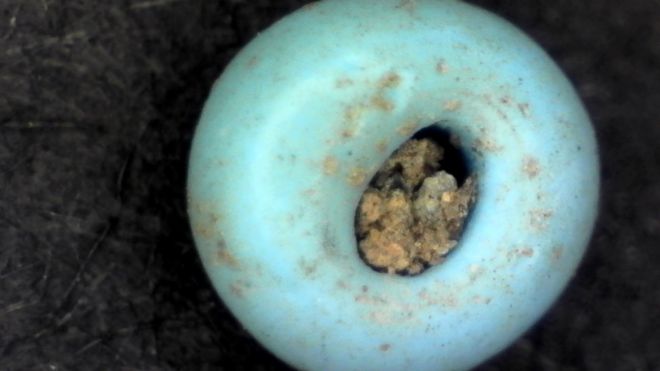
A ceramic faience jewellery bead found at Priory Street
ARCHAEOLOGY WALES

An archaeological dig described as one of the most important in Wales has now been buried again and handed back to developers.

Archaeologists have spent three months sifting the site on a main street in Carmarthen, making substantial finds.

The dig was a condition of planning permission for a block of flats there.

As a result Archaeology Wales now believes Roman Carmarthen was established earlier and was a wealthy town of considerable status.

Its team moved in after developers had demolished a former car showroom and before they started work building homes for the Bro Myrddin housing association.

Read the rest of this article...

Archaeologists unearth Roman road in Netherlands

The dig is metres away from a main road
OMROEP WEST

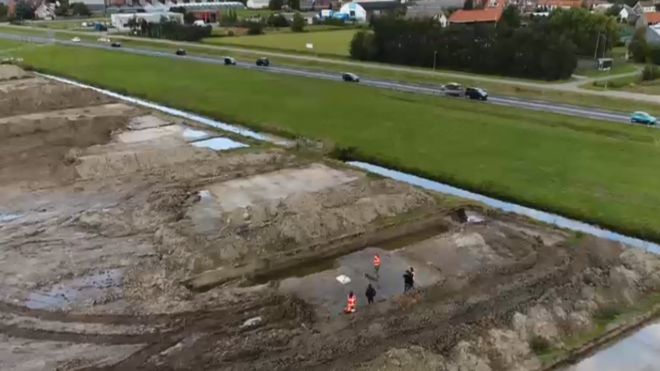
Archaeologists in the Netherlands have discovered a 2,000-year-old stretch of Roman road and the remains of a Roman village at the town of Katwijk, which once marked the northern boundary of the Roman Empire.

The road is 125 metres (410 ft) long and lies close to a busy highway in the Valkenburg suburb. The Roman village comes complete with a canal and burial ground, the Omroep West regional broadcaster reports.

South Holland Province asked archaeologists to examine the whole area where the new RijnlandRoute bypass is to run, aware of the local Roman legacy and anxious to preserve any finds.

The Emperor Claudius built the city of Lugdunum Batavorum at the mouth of the Old Rhine River, which still flows through Katwijk, and ships would sail from there for Britain. But no one expected to find such well-preserved remains in Katwijk itself.

Read the rest of this article...

Wednesday, 26 September 2018

Thousands of objects discovered in Scandinavia’s first Viking city

Danish archaeologists have excavated the streets beneath Ribe to discover how the first city of the Viking age was established.

The bead-makers of 8th century Ribe used pieces of glass gathered from old Roman mosaics as their raw material. They didn’t have access to newly manufactured glass. This is one of the many details that tells us about the city’s network. 
(Photo: Museum of Southwest Jutland)

If you want to know anything about the Viking Age, Ribe, in west Denmark, is the place to go.
Archaeologists from Aarhus University and Southwest Jutland Museums (Denmark) have been excavating the Viking city as part of the Northern Emporium Project in minute detail.
We have dug down to three metres, where we find traces of the first cities of the Nordic region.
Thousands of items discovered beneath the streets of Ribe
Deep beneath street level are thousands of Viking finds. We have discovered everything from beads, amulets, coins, and lost combs, to dog excrement and gnawed bones.
We have also been surprised on several occasions, such as when we discovered a piece of a lyre (a harp-like stringed instrument), complete with tuning pegs. This discovery alone gives the Viking trading city of Ribe a whole new soundtrack.
Read the rest of this article...

Chirk Castle dig tries to unearth origins of Offa's Dyke

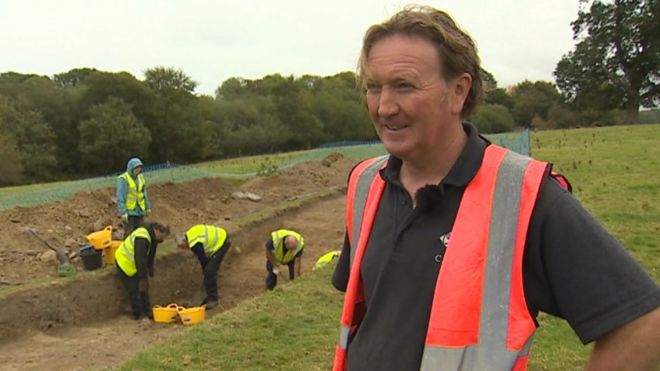
Archaeologist Ian Grant said some suggest King Offa's predecessor may have started the dyke


An archaeological dig at 13th Century Chirk Castle is trying to determine the age of Britain's longest ancient monument.
Offa's Dyke runs 177 miles (285km) from Chepstow to Prestatyn and takes its name from the 8th Century Anglo-Saxon king of Mercia.
It is believed Offa built the dyke as a border between his kingdom and Wales.
However, opinion is divided about the actual age of the dyke, part of which runs through the castle's grounds.
previous examination of part of the dyke by experts suggested work may have started between 430 and 652 AD - more than 200 years earlier than the widely-accepted date of construction.

Read the rest of this article...

Ancient marble head of god Dionysus discovered under Rome

The head of Dionysus was found near the Roman Forum. Photos:  Archeological Park of the Colosseum. Archeologists in Rome have uncovered a la...