Monday, 18 February 2019

DES FORTIFICATIONS ET UN HABITAT DU MOYEN ÂGE À HARFLEUR


À Harfleur (Normandie), les équipes de l’Inrap ont mis au jour des éléments de fortification remarquables, dont une tour creuse et un ouvrage défensif avancé (casemate), ainsi que des vestiges d’habitation des XIIIe et XIVe siècles. Ces découvertes viennent enrichir l’histoire de ce port stratégique de l’estuaire de la Seine, supplanté seulement au début du XVIe siècle par le Havre.

Read the rest of this article...

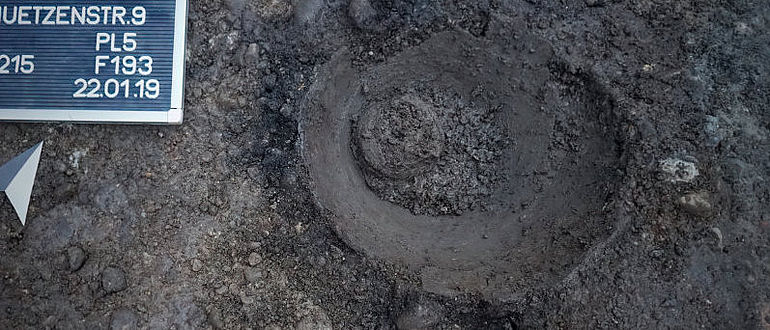
Mittelalterliche Siedlungsspuren gesucht – 3.000 Jahre altes Grab gefunden


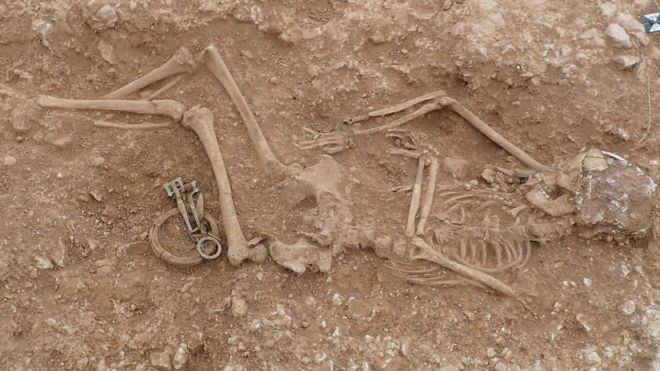
Dynamische Interaktionszone am Nordrand des Kaukasus
Ein internationales Forschungsteam koordiniert von der Eurasien-Abteilung des Deutschen Archäologischen Instituts (DAI) in Berlin und dem Max-Planck-Institut für Menschheitsgeschichte in Jena (MPI-SHH) konnte erstmals systematische paläogenetische Untersuchungen im Kaukasus durchführen. Die kürzlich erschienene Studie fußt auf den Analysen genomweiter Daten von 45 Individuen aus der Steppen- und der Gebirgszone des Nordkaukasus. Die zwischen 6500 und 3500 Jahre alten Skelette zeigen, dass die genetische Signatur in den nördlichen Bergflanken den Gruppen südlich des Kaukasus ähnelt und dort eine scharfe genetische Grenze zu den Steppengebieten im Norden verläuft. 

Read the rest of this article...

Thursday, 6 December 2018

Stonehenge tunnel: The background to the row

Will tunnel destroy secrets of Stonehenge?

Stonehenge is one of the UK's most popular tourist attractions, drawing 1.5m visitors visitors alone last year. But plans to build a road tunnel nearby to help ease congestion have enraged some archaeologists.

Here is the background to the row.

Why is a tunnel being built?

Visitors to Stonehenge typically arrive there via the A303, a major link road between London and the South West.

However, the single carriageway section of road past the site is a notorious bottleneck, especially in the summer months.

Read the rest of this article...

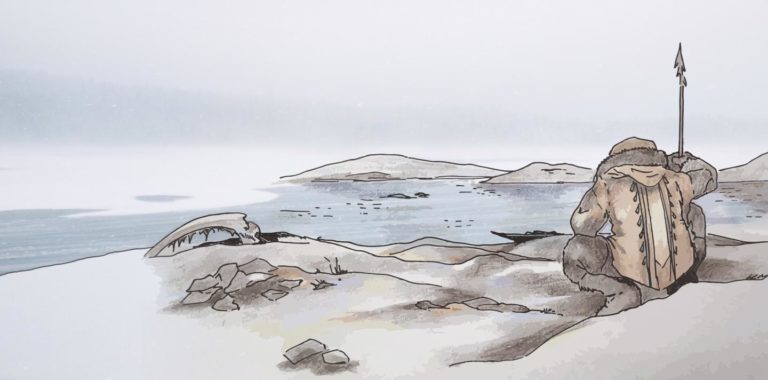
First ancient DNA from mainland Finland reveals origins of Siberian ancestry in region


New study shows that the genetic makeup of northern Europe traces back to migrations from Siberia that began at least 3,500 years ago and that, as recently as the Iron Age, ancestors of the Saami lived in a larger area of Finland than today.

Researchers from the Max-Planck-Institute for the Science of Human History and the University of Helsinki have analyzed the first ancient DNA from mainland Finland. As described in Nature Communications, ancient DNA was extracted from bones and teeth from a 3,500 year-old burial on the Kola Peninsula, Russia, and a 1,500 year-old water burial in Finland. The results reveal the possible path along which ancient people from Siberia spread to Finland and Northwestern Russia.

Researchers found the earliest evidence of Siberian ancestry in Fennoscandia in a population inhabiting the Kola Peninsula, in Northwestern Russia, dating to around 4,000 years ago. This genetic ancestry then later spread to populations living in Finland. The study also found that people genetically similar to present-day Saami people inhabited areas in much more southern parts of Finland than the Saami today.

Read the rest of this article...

Burial sites from 5th and 6th centuries yield unexpected treasures

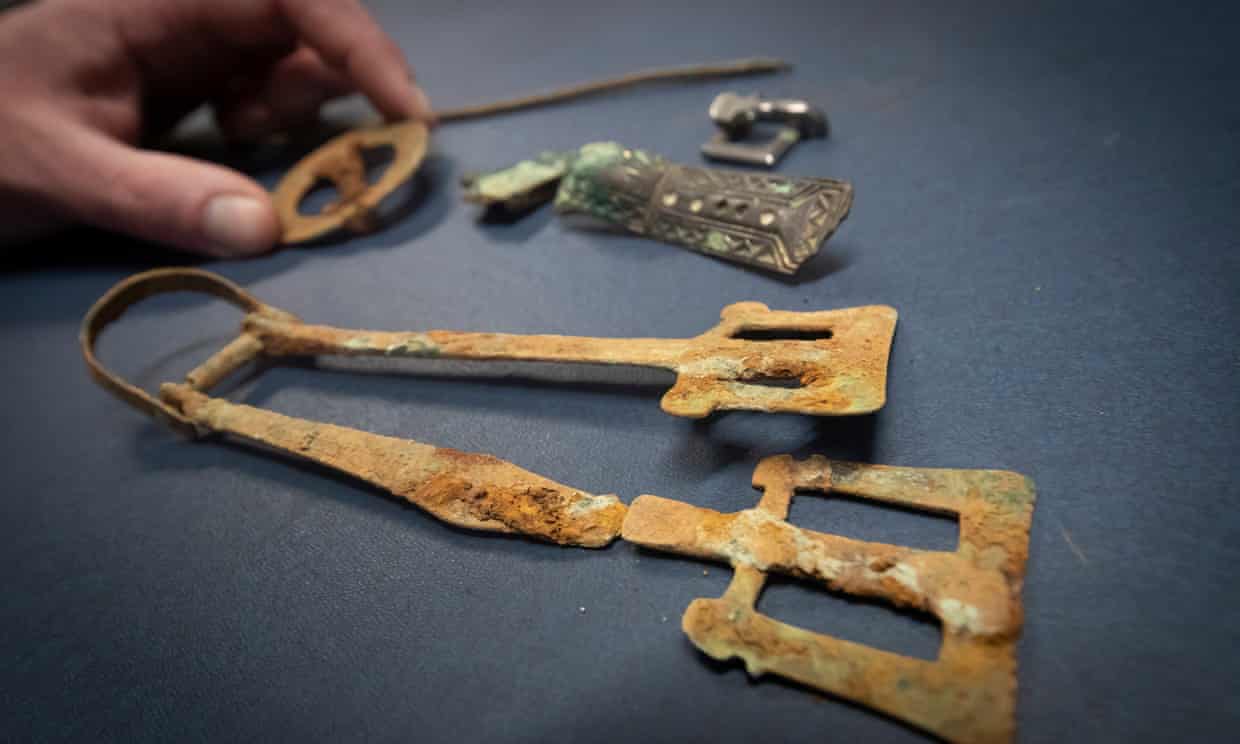
Some of the artefacts discovered during excavations in Lincolnshire. 
Photograph: Danny Lawson/PA

Archaeologists have uncovered lavish burial sites for women in Lincolnshire from the fifth and sixth centuries, which illustrate how women of the time made themselves resplendent.

Items recovered from the previously unknown Anglo-Saxon cemetery include jewellery made from amber, silver and glass as well as personal grooming items such as tweezers.

Dr Hugh Willmott, senior lecturer in European historical archaeology from Sheffield University and a dig leader, said: “These women wore necklaces made from sometimes hundreds of amber, glass and rock crystal beads, used personal items such as tweezers, carried fabric bags held open by elephant ivory rings, and wore exquisitely decorated brooches to fasten their clothing.

Read the rest of this article...
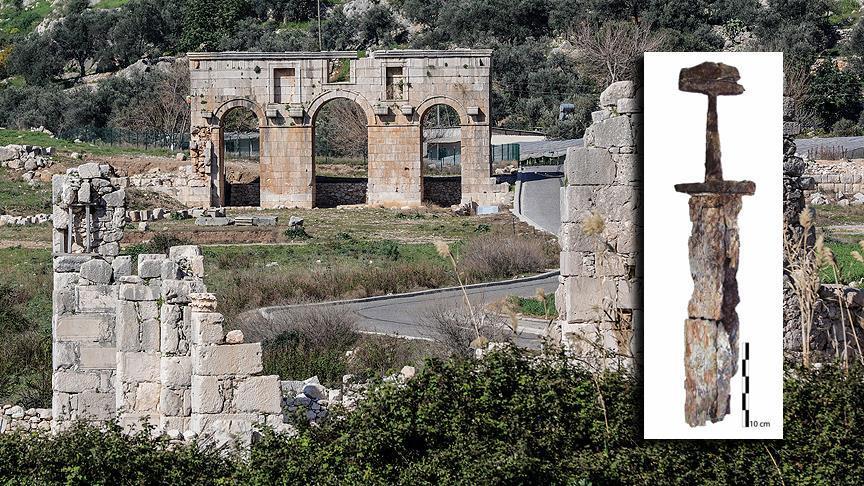
Archeologists find Viking sword in southern Turkey


Turkish archeologists uncover Viking sword from 9th-10th century in ancient city of Patara

Searching through the ancient city of Patara in Turkey's Mediterranean resort city of Antalya, Turkish archeologists uncovered a sword dating back to over a millennium.

Lead excavator Professor Havva Iskan Isik of Akdeniz University told Anadolu Agency that they identified a Viking sword from the ninth or 10th century.

Isik said they have been carrying out excavation works for 30 years and have discovered important archaeological evidence so far. 

"Finding a Viking sword in a harbor city in the Mediterranean area is of great importance," she said.

Read the rest of this article...
Lincolnshire Anglo-Saxon cemetery burials unearthed

Experts said a "significant proportion of very lavish burials" belonged to women

Burials of richly-dressed women interred with their jewellery and personal items have been unearthed at an Anglo-Saxon cemetery.

About 20 graves dating to the fifth and sixth centuries, including one containing a woman cradling a baby, were found in the Lincolnshire Wolds.

The cemetery was discovered after a metal detectorist uncovered artefacts at the site in Scremby, near Skegness.

Experts said there was a "rich array" including necklaces and brooches

Read the rest of this article...
Ancient marble head of god Dionysus discovered under Rome

The head of Dionysus was found near the Roman Forum. Photos:  Archeological Park of the Colosseum. Archeologists in Rome have uncovered a la...