Wednesday, 26 September 2018

Thousands of objects discovered in Scandinavia’s first Viking city

Danish archaeologists have excavated the streets beneath Ribe to discover how the first city of the Viking age was established.

The bead-makers of 8th century Ribe used pieces of glass gathered from old Roman mosaics as their raw material. They didn’t have access to newly manufactured glass. This is one of the many details that tells us about the city’s network. 
(Photo: Museum of Southwest Jutland)

If you want to know anything about the Viking Age, Ribe, in west Denmark, is the place to go.
Archaeologists from Aarhus University and Southwest Jutland Museums (Denmark) have been excavating the Viking city as part of the Northern Emporium Project in minute detail.
We have dug down to three metres, where we find traces of the first cities of the Nordic region.
Thousands of items discovered beneath the streets of Ribe
Deep beneath street level are thousands of Viking finds. We have discovered everything from beads, amulets, coins, and lost combs, to dog excrement and gnawed bones.
We have also been surprised on several occasions, such as when we discovered a piece of a lyre (a harp-like stringed instrument), complete with tuning pegs. This discovery alone gives the Viking trading city of Ribe a whole new soundtrack.
Read the rest of this article...

Chirk Castle dig tries to unearth origins of Offa's Dyke

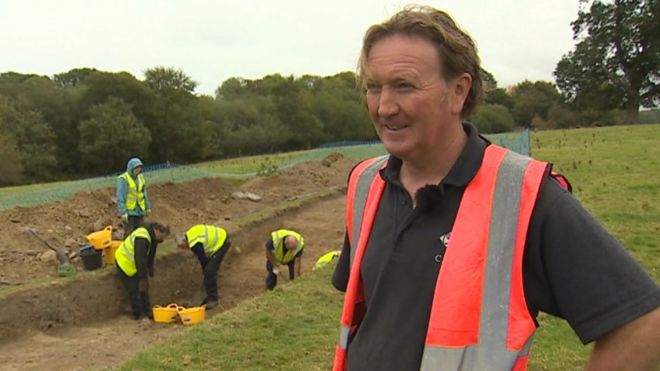
Archaeologist Ian Grant said some suggest King Offa's predecessor may have started the dyke


An archaeological dig at 13th Century Chirk Castle is trying to determine the age of Britain's longest ancient monument.
Offa's Dyke runs 177 miles (285km) from Chepstow to Prestatyn and takes its name from the 8th Century Anglo-Saxon king of Mercia.
It is believed Offa built the dyke as a border between his kingdom and Wales.
However, opinion is divided about the actual age of the dyke, part of which runs through the castle's grounds.
previous examination of part of the dyke by experts suggested work may have started between 430 and 652 AD - more than 200 years earlier than the widely-accepted date of construction.

Read the rest of this article...
Thursday, 16 August 2018

EMAS Study Tour to Devon and Cornwall


Study Tour to Devon and Cornwall
Guide David Beard MA, FSA
29 October 2018 to 3 November 2018
The EMAS Autumn study tour this year will be to Devon and Cornwall – an area full of superb archaeological sites.
We will be based in Exeter, with its wonderful cathedral and interesting castle.
Sites that we will visit include Grimspound Prehistoric settlement, Cleeve Abbey, Hound Tor Deserted Medieval Village, The Anglo-Saxon Burh at Lydford, and Chysauster Iron Age Village.
The cost of this study tour is £644 per person in a single room and £544 per person sharing a twin room.
Please note, in order to be sure of booking hotel rooms, we must have confirmation by Monday, 10 September at the very latest.

Monday, 6 August 2018

Experts ask if there was a tsunami in ancient Orkney

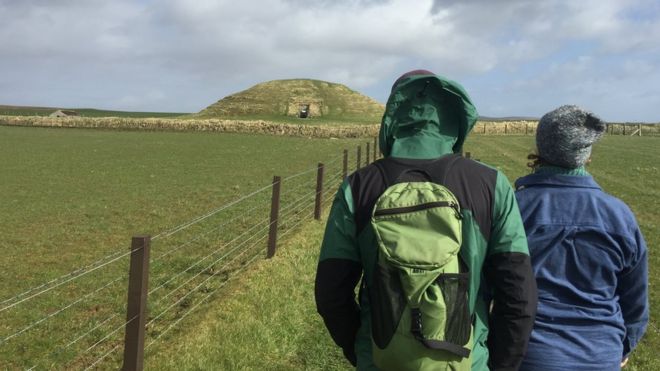
Maesehowe is Orkney's most famous burial cairn, and a popular tourist attraction

A new academic paper has suggested it is possible neolithic mass burials in Orkney and Shetland contain the bodies of tsunami victims.

The authors said archaeologists should test remains to see if the bones show the distinctive signs of drowning in sea water.

Prof James Goff said the work was based on findings from the southern hemisphere.

It is published in the Journal of Archaeological Method and Theory.

Prof Goff, from the University of New South Wales, told BBC Radio Orkney there are sites in the Solomon Islands and Vanuatu where there are "known tsunamis that have happened in prehistory at the times that these mass burials date to".

Read the rest of this article...
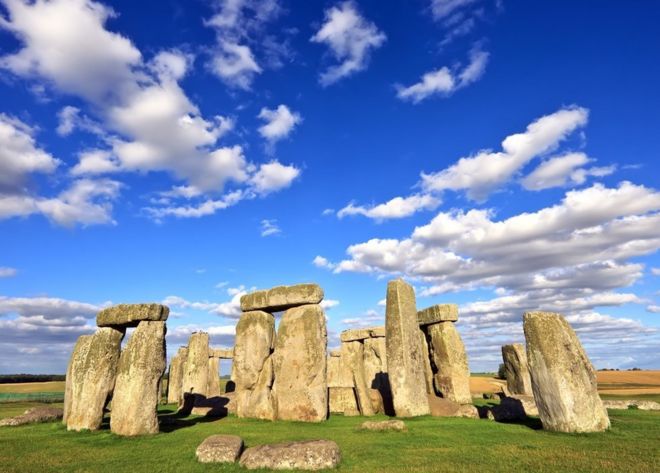
Stonehenge: Origins of those who built world-famous monument revealed by groundbreaking scientific research

Experts have discovered act of cremation actually crystallises a bone’s structure and allows its origins to be detected – something previously thought to be impossible


A new scientific research collaboration is, for the first time, revealing who built Stonehenge. The cutting-edge study sheds a remarkable light on the geographical origins of the Neolithic community that first constructed the ancient site.

Complex tests carried out on 25 Neolithic people who were buried at or following the time of the initial construction of the now world-famous monument, have revealed that 10 of them lived nowhere near Stonehenge, but in western Britain, and that half of those 10 potentially came from southwest Wales (where the earliest Stonehenge monoliths came from).

The other 15 could be local to Stonehenge, Wiltshire-origin individuals, or the children of other descendants of migrants from the west. All the remains were cremations.


Read the rest of this article...

Small height evolved twice on 'Hobbit' island of Flores

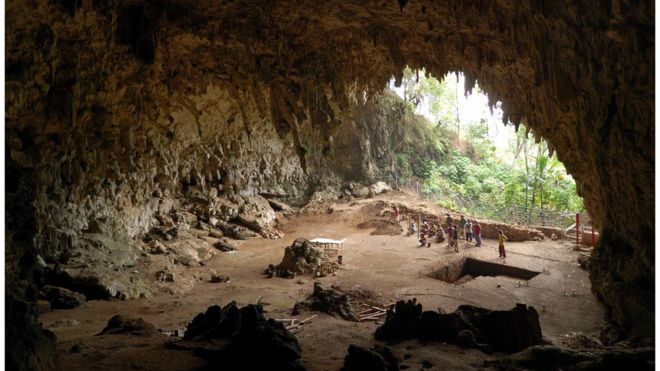
Liang Bua cave, where the Hobbit remains were found
ROSINO / CREATIVE COMMONS

A new study has shown that small height evolved twice in humans on the Indonesian island of Flores.

Scientists decoded the DNA of modern-day "pygmy" people to find out if they might be partly descended from the extinct Hobbit species.

The remains of these Hobbits were found during an archaeological dig on Flores 15 years ago.

The new analysis, published in the journal Science, found no trace of the Hobbit's DNA in the present-day people.

This is important because some scientists had wondered whether modern humans (Homo sapiens) could have mixed with the Hobbit population when they first arrived on the island thousands of years ago. In theory, this could have led to Hobbit genes being passed down into living people on the island.

Read the rest of this article...

Stonehenge: First residents from west Wales

Researchers have shown that cremated humans at Stonehenge were from the same region of Wales as the stones used in construction.
The key question was to understand the geographic origin of the people buried at Stonehenge.
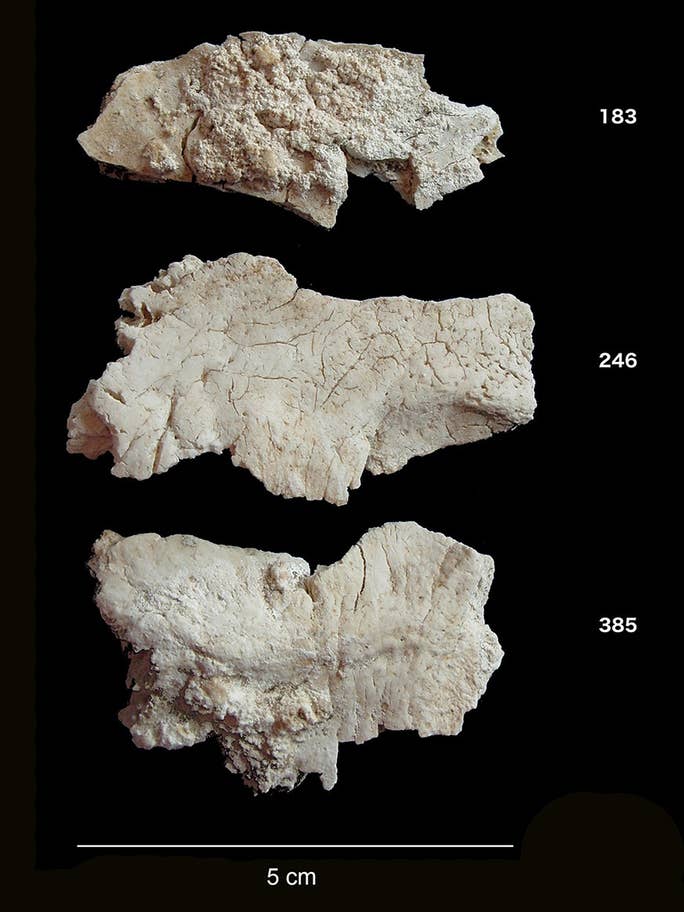
The key innovation was finding that high temperatures of cremation can crystallise a skull, locking in the chemical signal of its origin.
The first long-term residents of Stonehenge, along with the first stones, arrived about 5,000 years ago.

Read the rest of this article...

Ancient marble head of god Dionysus discovered under Rome

The head of Dionysus was found near the Roman Forum. Photos:  Archeological Park of the Colosseum. Archeologists in Rome have uncovered a la...