Monday, 25 February 2019

Unique Medieval Burial Found In Sicily

This medieval man's skeleton, bearing marks of stab wounds, was found facedown
in a shallow pit in Sicily 
[Credit: Emanuele Canzonieri; Roberto Micciche. et al. 2019]

In medieval Sicily, a man was stabbed multiple times in the back, buried in a really weird way and ostensibly lost to history.

Now, hundreds of years later, archaeologists have excavated evidence of this ancient crime in the Piazza Armerina, Sicily. The researchers found the man's skeleton lying face-down in a shallow pit, empty of any funerary objects typical of ancient burials. The body was buried in a position that was unusual for that time period, they reported last month in the International Journal of Osteoarchaeology.

The evidence suggests that the man, lived in the 11th century and was between 30 and 40 years old when he died. Using CT scans and 3D reconstructions, the researchers set out to determine how he died and why his burial was so unusual.

According to the report, there was evidence of six cuts on the individual's sternum (breastbone) that were indicative of stab wounds likely inflicted by a knife or dagger. On the right side of his sternum, the researchers found a chop mark where a piece of the bone had been removed, likely by a twisting motion from the weapon.

Read the rest of this article...

Yes, That Viking Warrior Buried with Weapons Really Was a Woman

An illustration of what the female warrior may have looked like.
Credit: Drawing by Tancredi Valeri; Copyright Antiquity Publications Ltd.

The ancient warrior was given a prestigious Viking burial, complete with deadly Viking weapons, a bag of gaming pieces (possibly to represent military command) and two horses, one bridled for riding. This mighty warrior — long thought to be be a man — made headlines in 2017 when researchers in Sweden announced that the individual was, in fact, a woman.

The intense scrutiny that followed caught the researchers by surprise.

The barrage of questions from the public and other scientists was unrelenting: Were the researchers sure they had analyzed the right bones? Was there more than one body in the burial, of which one was surely a man? And if the warrior's sex was indeed female, is it possible they were a transgender man? [See Images of the Viking Woman Warrior's Burial]

Now, in a new study published online yesterday (Feb. 19) in the journal Antiquity, the researchers of the original study have reaffirmed their conclusion that this mighty individual was a woman. The new study addresses all the questions people raised, and more.

Read the rest of this article...

Second Rare Roman Coin Hoard Found In Warwickshire

Coins from Year of the Four Emperors and pot found in Warwickshire 
[Credit: Warwickshire County Council]

Warwickshire museum service needs help to raise the funds to buy a major Roman hoard, found recently in Warwickshire.

The hoard made up of 440 silver denarii coins was uncovered during an archaeological dig at a Roman site on the Edge Hill in 2015. They were buried in a ceramic pot over 1900 years ago, under the floor of a building. This is the second hoard of denarii to be found in this area and this new discovery contains 78 coins dating to AD 68-69, a turbulent time in Roman history known as the ‘Year of the Four Emperors’.

This important period in Roman history saw a civil war sparked by the death of Nero in AD 68, resulting in four successive rulers in a short span of time: Galba, Otho, Vitellius and finally Vespasian. As they vied for power, each contender struck their own coins to fund their armies, and these coins are incredibly rare. Within a roughly 18 month period the title of Emperor changed hands four times. Very few of these coins from this turbulent time survive. The second South Warwickshire hoard contains the largest collection of civil war-era coins ever found.

Read the rest of this article...

University of Cambridge release trove of aerial photos of Wales


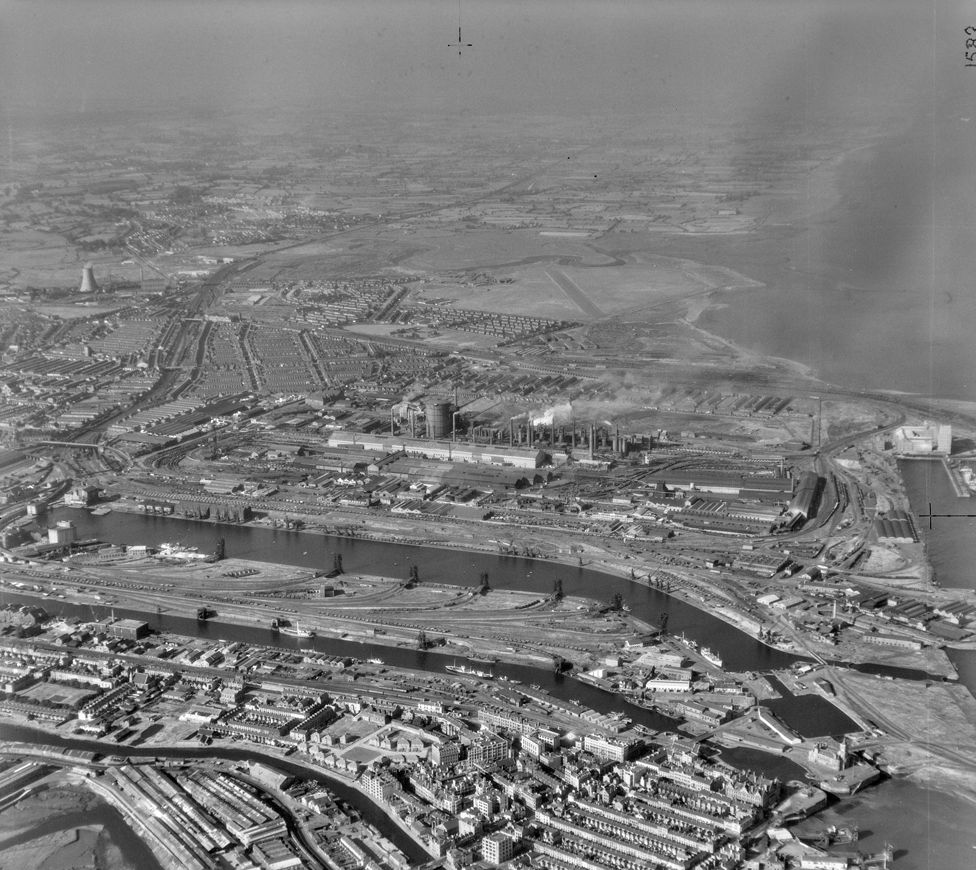
A series of aerial photographs which form part of a collection labelled the "historical Google Earth" show the changing face of Wales.

The images, some dating back to 1945, have been made available online by the University of Cambridge.

RAF pilots were asked to capture the bomb-scarred post-war period to the emergence of motorways and new cities.

Prof Martin Millett said the images "let you travel back in time to a Britain which no longer exists".

Read the rest of this article...

Neolithic skull found by Thames 'mudlarkers'

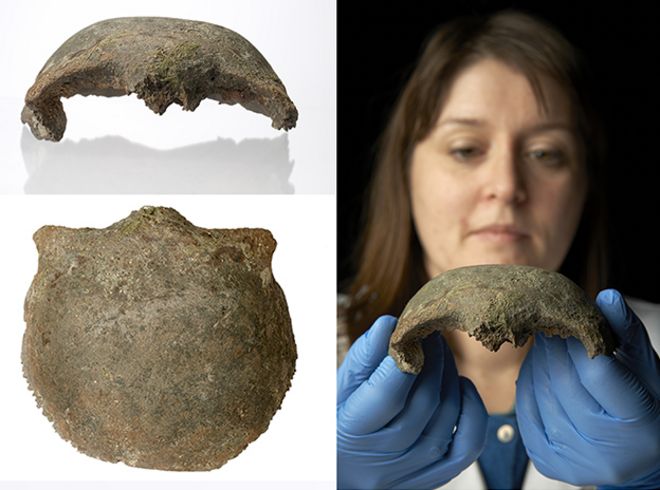
The frontal bone was radiocarbon dated to 3,600 BC
MUSEUM OF LONDON

Here's a piece of history pulled from the muddy banks of the River Thames.

It's a skull fragment that is 5,600 years old. It dates to a time long before there was any permanent settlement on the site we now know as London.

Investigations indicate it belonged to a male over the age of 18.

There are older Neolithic remains that have been recovered in the region, but what makes this specimen especially interesting is that it's the earliest ever skull found by "mudlarkers".

If you haven't heard of them before - they're the band of mostly amateur archaeologists who scour the Thames' edges at low tide for objects of intrigue and antiquity. And they're constantly picking up fascinating items - many of which end up in the Museum of London, where this frontal bone will now be displayed from Wednesday.

Read the rest of this article...


Watch the video

St Michan's, Dublin: Vandals decapitate 800-year-old crusader

The crusader's head was "severed from his body and taken away"

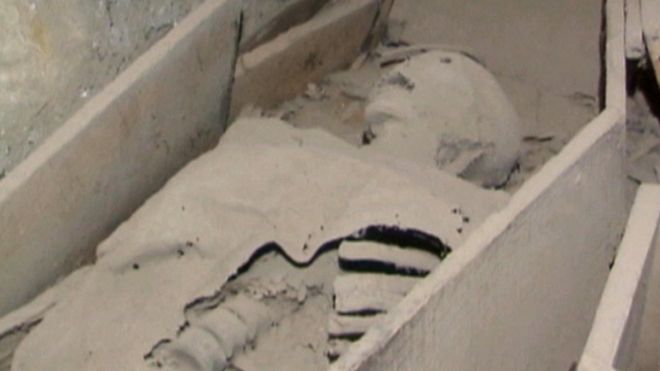
An 800-year-old "crusader" from a crypt in a Dublin church has been decapitated by vandals.

Archdeacon David Pierpoint told RTE the crusader's head has been "severed from his body and taken away".

The discovery was made as a tour guide was preparing to open the church for visitors on Monday afternoon.

Archdeacon Pierpoint said he was upset and disappointed that the church has been targeted again by vandals.

Read the rest of this article...

Tuesday, 19 February 2019

Stonehenge: Archaeologists discover long-lost tools used to build ancient monument

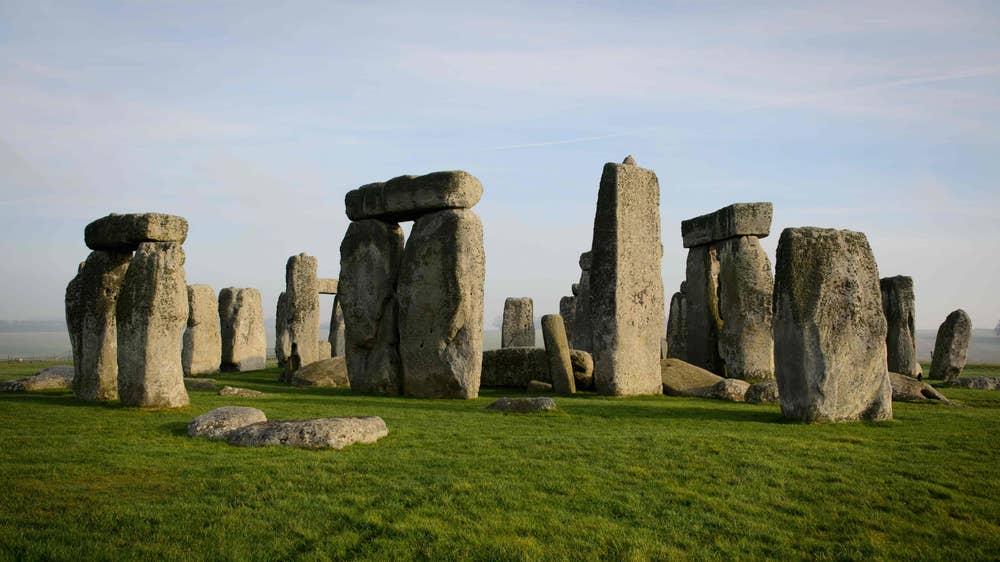
Scientists know the Stonehenge early phase standing stones (the so-called bluestones rather than the later more famous and much larger sarsen stones) come from this and other Pembrokeshire prehistoric quarries – because of chemical identification tests they have carried out on the rocks.
So far, only two quarries have been identified – both on the northern slopes of the Preseli Hills in Pembrokeshire, southwest Wales - but geologists, who have studied the Stonehenge bluestones, think it is likely there were at least three or four other quarries that have yet to be found.
The discovery of the tools is likely to rekindle one of archaeology’s biggest debates – how did the builders of Stonehenge transport the bluestones (an estimated 79 of them, each weighing approximately 2 tonnes) from southwest Wales to Salisbury Plain.
Read the rest of this article...

Ancient marble head of god Dionysus discovered under Rome

The head of Dionysus was found near the Roman Forum. Photos:  Archeological Park of the Colosseum. Archeologists in Rome have uncovered a la...