Monday, 27 May 2019

Sensasjonell runestein funnet i Østfold

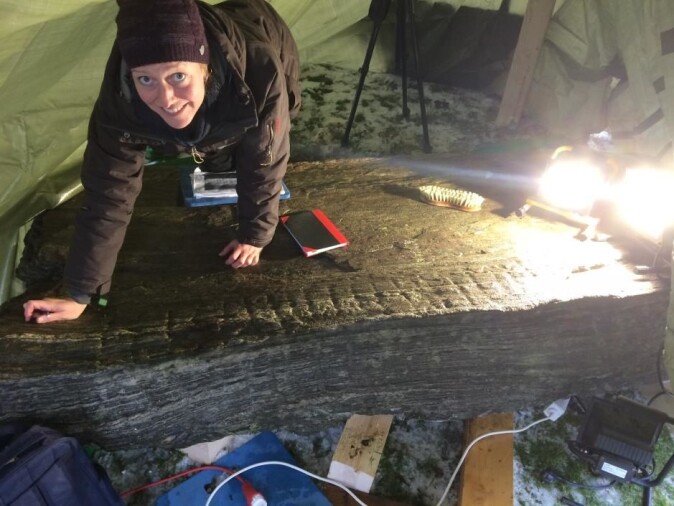
Karoline Kjesrud jobber for å identifisere runene på den slitte runesteinen. 
(Foto: Kulturhistorisk museum, Universitetet i Oslo)

Arkeologer har funnet en runestein som stammer fra 400-tallet, i Øverby i Rakkestad.

Det er uvanlig å finne runesteiner, og så gamle runesteiner er oppsiktsvekkende, mener Danmarks ledende ekspert på runer, Lisbeth Imer.

Den eldste danske runesteinen er fra starten av 700-tallet.

– Det er litt av en sensasjon. Vi er grønne av misunnelse her i Danmark, sier Imer, som er seniorforsker ved det danske Nationalmuseet.

Read the rest of this article...

Sunday, 26 May 2019

Archaeologists find remains of the Roman invasion of Ayrshire

The remains were uncovered during building work

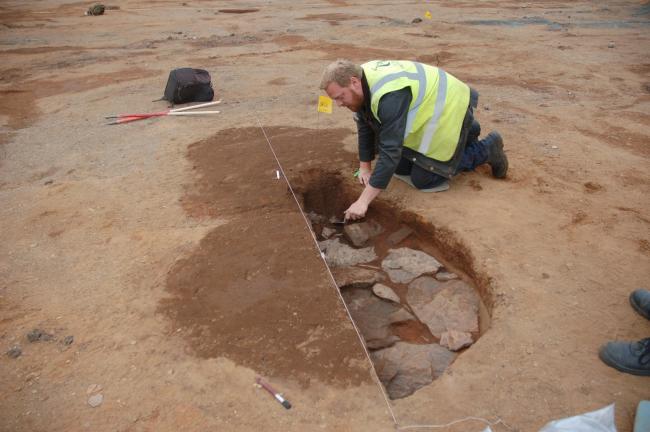
ARCHAEOLOGISTS have uncovered fresh evidence of a Roman invasion of Scotland under an Ayrshire playing field.

A marching camp used by the Legions as they made their way along the coast was found by a team carrying out work prior to the building of the new Ayr Academy.

It is thought to date back to the first century AD, when an army under Agricola, the Roman Governor of Britain, fought its way up to Aberdeenshire and defeated an army of Caledonians at the battle of Mons Grampius.

Read the rest of this article...

'Phenomenal' 2,300-year-old bark shield found in Leicestershire

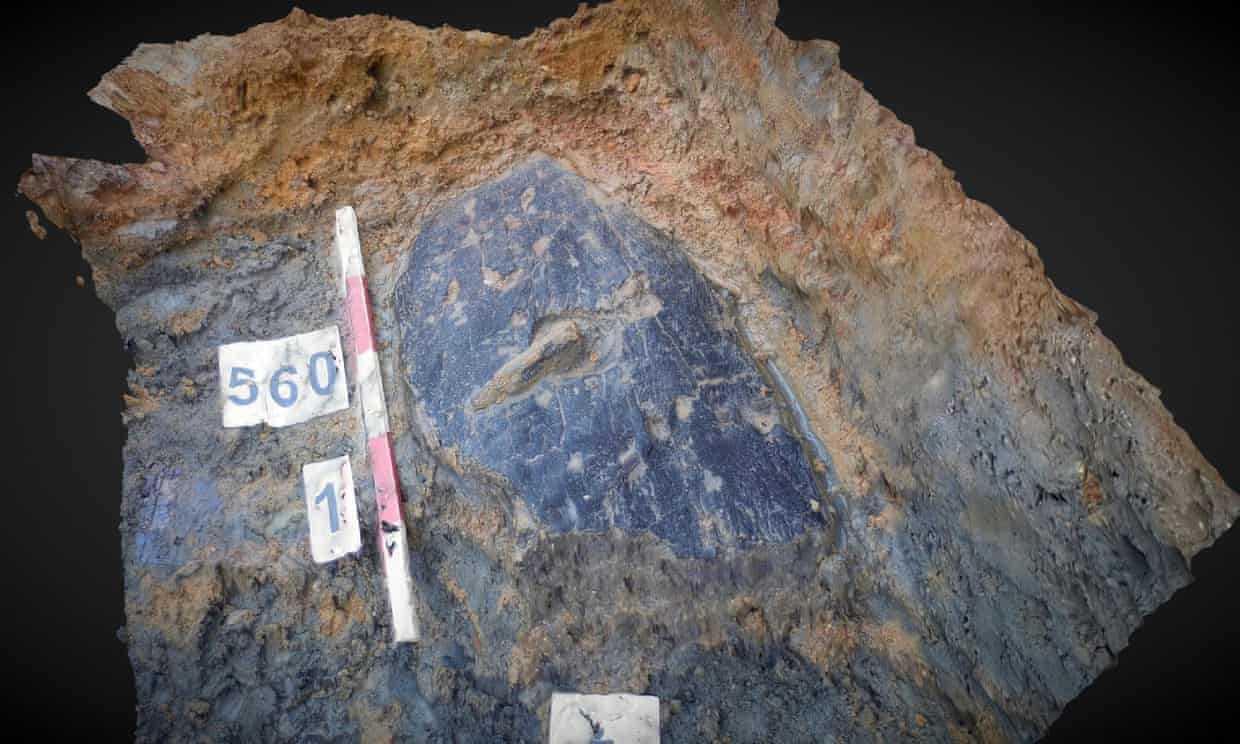
The shield is made from green bark that has been stiffened with internal wooden laths.

An “astonishing and unparalleled” 2,300-year-old shield made of tree bark has been discovered in Leicestershire, the only example of its kind ever found in Europe.

Archaeologists say the discovery of the shield, made between 395 and 250BC, has completely overturned assumptions about the weapons used in the iron age, sparking breathless reactions among experts of the period.

“This is an absolutely phenomenal object, one of the most marvellous, internationally important finds that I have encountered in my career,” said Julia Farley, curator of British and European iron age collections at the British Museum.

“So often it is gold which grabs the headlines, but this bark shield is much rarer.”

Read the rest of this article...

Wednesday, 22 May 2019

New data platform illuminates history of humans' environmental impact

Animal bones on display.
Credit: © DedMityay / Adobe Stock

The human environmental footprint is not only deep, but old.

Ancient traces of this footprint can be found in animal bones, shells, scales and antlers at archaeological sites. Together, these specimens tell the millennia-long story of how humans have hunted, domesticated and transported animals, altered landscapes and responded to environmental changes such as shifting temperatures and sea levels.

Now, that story is available digitally through a new open-access data platform known as ZooArchNet, which links records of animals across biological and archaeological databases.

Making these specimen records accessible digitally helps provide a long-term perspective on current biodiversity crises, such as animal extinction and habitat loss, and could lead to more informed conservation policies, said Michelle LeFebvre, postdoctoral associate at the Florida Museum of Natural History and lead author of a study introducing ZooArchNet.

Read the rest of this article...

A gold serpent pendant from Viking Age Denmark

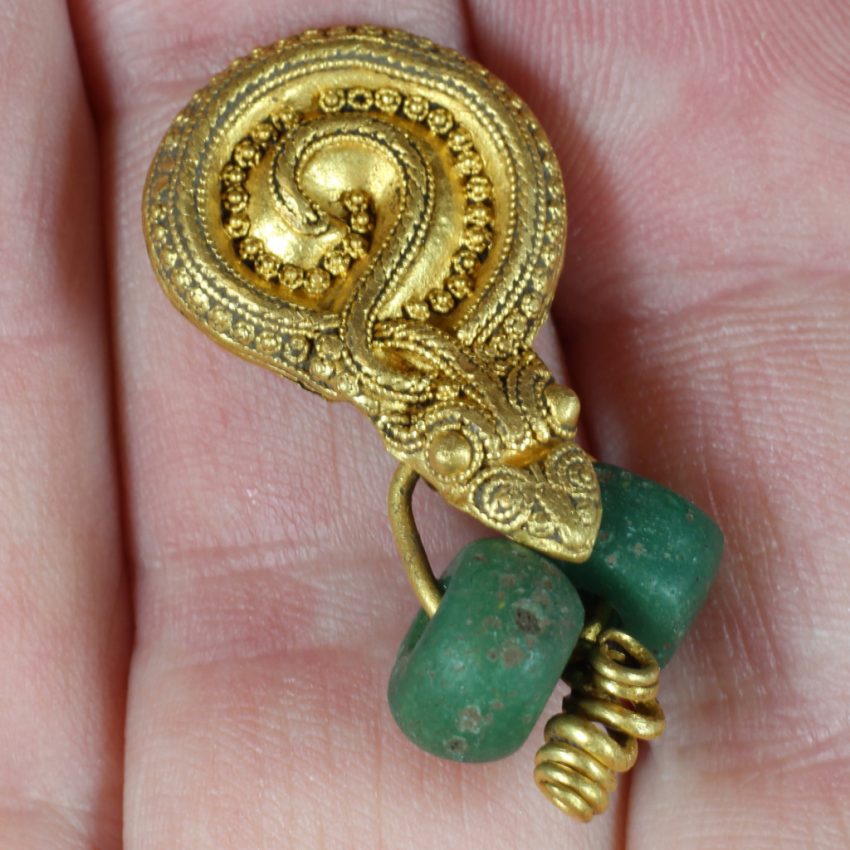
Photo: Southwest Jutland Museums.

This beautiful serpent pendant was recently discovered near Gørding in Denmark by Jean Stokholm and Doris Birch Mathiesen. Fashioned out of gold and decorated using the filigree technique, it most likely dates from the the 10th century AD.

It was originally suspended via a loop formed out of gold wire that was ornamented with a pair of green glass beads. Serpent pendants such as this one are known from across Viking Age Scandinavia and it has been suggested that they may have been associated with fertility or the god Odin (see Graslund, p. 126). This new find now forms part of the Southwest Jutland Museums.

Read the rest of this article...

Sunday, 19 May 2019

Analysis of the Palaeolithic diet shows no social divisions in food consumption

Credit: University of Granada

The study of the human diet in Palaeolithic times is currently among the research areas generating the greatest advances in knowledge. Analysis of the Palaeolithic diet is conducted mainly on the basis of stable isotopes of carbon and nitrogen, which are present in the collagen of human bones. These isotopes indicate the types of food consumed by the individual in the years leading up to their death.

Researchers from the University of Granada (UGR) have analyzed the diets of past peoples from samples in the anthropological collections of the Megalithic necropolises of Panoria (Darro, Granada) and El Barranquete (Nijar, Almeria). They find that although Megalithic communities did vary their eating habits over time, there were no relevant social differences, either in the type of food or in the proportion of proteins consumed.


Read the rest of this article...
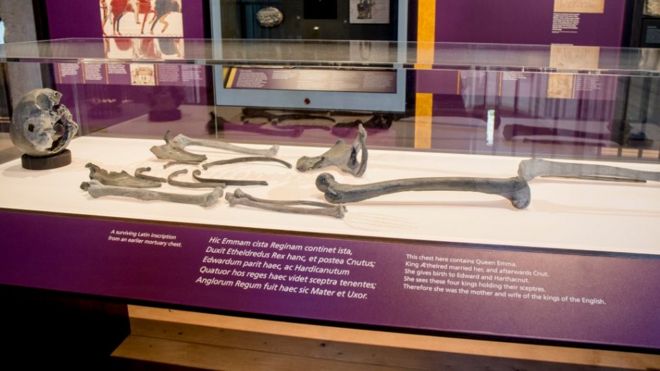
The riddle of Winchester Cathedral's skeletons

A reconstruction of Queen Emma's bones is on display but her skull is not completely intact making it too difficult to create a 3D model of her
Image copyright WINCHESTER CATHEDRAL

For centuries bones believed to be the remains of Anglo-Saxon and early Norman rulers and bishops have been kept in mortuary chests in Winchester Cathedral.

Over the years the skeletal remains have been mixed up and moved around, resulting in some confusion over whose they are.

Fresh research has now dated the contents of the chests and established that the only bones from a mature female are likely to be those of Queen Emma of Normandy.

But that is only the first piece in a puzzle researchers from the University of Bristol are now trying to solve.

They will use DNA extracted from the bones to try to establish the identity of the other 22 people whose remains were in the wooden caskets.

Read the rest of this article...

Ancient marble head of god Dionysus discovered under Rome

The head of Dionysus was found near the Roman Forum. Photos:  Archeological Park of the Colosseum. Archeologists in Rome have uncovered a la...